
Bedside nursing involves connecting with patients and assessing, delivering care, thinking on your feet, and coordinating with other patient care team members. The knowledge and experience you gain through bedside nursing is irreplaceable, making this an almost ideal starting point to a nursing career.

For most nurses, bedside care is the first professional nursing role they step into after graduation. The transition from graduation to professional practice can be fast-paced and intimidating, but it is also where confidence and clinical judgment develop, and a professional identity forms.
Over decades of experience as a bedside nurse, family nurse practitioner, and nursing educator, I have found bedside nursing to be an irreplaceable part of nursing development that hones key skills and provides an important perspective. It is where nurses learn to translate theory into practice, knowledge into action, and compassion into care.
I do not think I have ever spoken to a nurse who expressed, “I wish I had not done that time at the bedside.” They might think it was challenging or be glad to have moved into a different practice area, but I have never heard a nurse say anything approaching “Bedside care didn’t teach me anything. I’d be just as good without it.”
These experiences underscore why many careers begin here. So, what is bedside nursing and how does it improve specific nursing skills? Join me in exploring this vital area of nursing and see how it can be the foundational start to a nursing career.
What is Bedside Nursing?
Bedside nursing is hands-on, direct patient care that most commonly occurs in hospital settings. Nurses practicing at the bedside work with patients throughout the course of a shift, continually assessing, intervening, educating, and supporting as needed.
This type of nursing practice can take place in various settings, including:
- Emergency departments
- Intensive care units
- Medical-surgical units
- Specialty floors like cardiac, labor and delivery, or oncology
Patient populations in these care environments vary, but communication with patients and families during vulnerable moments is central to bedside nursing. This type of nursing practice requires adaptability, as these professionals must regularly respond quickly to changes in a patient’s condition, recognize subtle warning signs, and communicate observations or concerns to the broader patient care team.
The face-to-face care experience across a wide range of patient populations and conditions makes this an ideal starting point for new nurses. Many hospitals now have nursing residency programs designed to acclimate newly licensed nurses to their units and provide additional guidance as they adjust to professional bedside nursing practice.
The clinical experience that bedside nurses gain is foundational to professional nursing practice.

Learn more about the role of nurses in healthcare and see what makes them so vital to meeting patient needs.
Core Responsibilities of Bedside Nursing
Although no two days are exactly alike at the bedside, the core responsibilities remain consistent. Technical skills are always important, but so are assessment, communication, and advocacy.
Patient Assessments
Patient assessment is one of the typical responsibilities associated with bedside care. Nurses collect both subjective and objective data through a variety of methods that inform patient care. Honing nursing assessment skills in a patient care context can help you to identify issues and intervene earlier for better patient outcomes. The assessments you will carry out at the bedside are comprehensive and include, but are not limited to:
- Emergency assessment
- Pain assessment
- Physical assessment such as neurological, cardiac, or respiratory
- Psychosocial assessment
Students first begin practicing their patient assessment skills alongside fellow cohort members in a controlled, instructor-led environment during nursing simulation and skills labs. Clinical rotations provide invaluable experience in practicing assessment skills, as they are likely the student’s first exposure to actual patient populations in a healthcare setting.
Residency programs can provide further support during the transition into professional practice, with coordinators guiding new graduate nurses as they hone patient assessment skills.

Nursing Communication
Communication is another essential responsibility of nurses delivering bedside care. Bedside nurses act as the primary link between patients, families, physicians, and other members of the healthcare team. Nurses use a variety of communication skills including verbal, nonverbal, and written, to develop rapport, advocate for patient needs, and facilitate care. At the bedside, nurses must be able to clearly and calmly communicate with individuals in physical or psychological distress. By using therapeutic communication techniques, nurses can convey support and reduce patient and family anxiety.
Bedside nurses must also communicate with other members of the healthcare team such as nurse practitioners, physicians, pharmacists, and physical or respiratory therapists. Nurses must be able to prioritize assessment findings and appropriately communicate patient needs to others involved in the care of the patient. Collaboration with this diverse team requires an understanding of unique roles and expertise. Communicating with others to ask questions is key to professional development. Even veteran nurses with decades of experience will regularly ask other members of the patient care team to clarify or double-check aspects of patient care such as medications that might cause adverse reactions.
In your future nursing career, you will never regret asking for a second opinion. However, you will always regret not asking if you had second thoughts about a care scenario and it resulted in harm to the patient. Developing your communication skills through bedside care is among the most important early-career skills you can improve.
Nursing Advocacy
Bedside nurses spend the most time with patients, which places them in a unique position to recognize unmet needs, changes in condition, or safety concerns. Advocacy may involve requesting additional assessments or interventions, questioning treatment, or speaking up when something does not seem right.
If you notice something out of the ordinary, conferring with a more experienced care team member, like a charge nurse, can lead to deeper insight into a patient’s condition and result in better care and patient outcomes. This is reciprocal, as research has shown that a nurse advocating for patients correlates with a better perception of that nurse’s professional values.
Advocacy is a pillar of nursing practice throughout any nursing career. Practicing advocacy at the bedside informs practice at other levels. When it comes to administrative roles and setting policies like staffing ratios, someone who has never been at the bedside has a totally different perspective than someone who has.

Interventions and Daily Duties
Nurses practicing at the bedside perform a range of clinical skills in addition to assessment, such as:
- Blood glucose monitoring
- Central line management
- IV insertion
- Medication administration
- Wound care
Each of these skills requires a different set of criteria. Since bedside nursing guarantees new care scenarios, the thing I say to students who ask how to get the most out of residency is, “Be proactive.”
Take starting an IV, for instance. Nursing students learn this skill, but it is typically first practiced on a medical manikin that can mimic human symptoms. The more routinely you complete these tasks, the more your skills and confidence improve. Bedside nursing means more opportunities to build these clinical skills and more confidence when providing care.
How Bedside Nursing Builds Critical Thinking in Nurses
As I regularly tell my students, no nursing program can teach every individual patient scenario you will encounter as a nurse. The healthcare scenarios in professional nursing practice are so varied that if you wanted to cover everything, you would never finish earning your degree.
A successful nursing career requires lifelong learning. Earning a Bachelor of Science in Nursing (BSN) introduces the concepts you need to know and helps you start thinking like a nurse, so that when you encounter situations during residency that do not occur in a textbook, you can think on your feet and provide the care needed to reach a positive outcome.
With repeated exposure to different patient care scenarios, you will gain a better understanding of what “normal” looks like, from heart and lung sounds to bloodwork numbers to the expected physiological response to a given medication. The experience you gain at the bedside, as well as the sheer number of patients you will treat, acclimates you to the “normal” of various situations.
Getting to know the “normals” of patient care is among the most significant ways that bedside nursing practice helps you develop your critical thinking skills. Once you know what is normal and abnormal, you are much better equipped to quickly recognize an issue and begin working toward a solution.
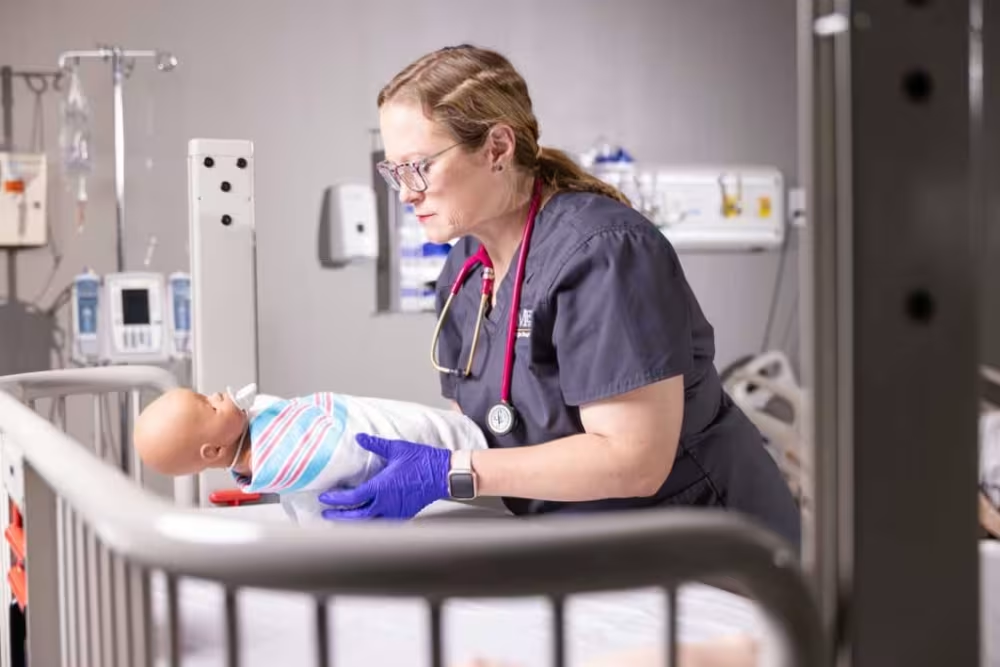
See how nursing simulation labs prepare students for patient care in a clinical setting
Overcoming Common Bedside Nursing Challenges
Bedside nursing is rewarding, but it is also physically, mentally, and emotionally demanding. Long shifts on your feet, constant decision-making, and emotional investment in patient outcomes can be taxing.
Gaining experience at the bedside is still one of the best things you can do for yourself professionally, but remember to cultivate self-care routines. These help you practice consistently without burning out.
Another of the most common challenges in bedside nursing is gaining experience in a clinical environment. As I explain to students, when you start working toward your BSN, your confidence is likely low, and it might feel like you will never learn everything in the curriculum. When you reach the halfway point and see how far you have come, you will gain confidence. After graduation and at the start of your first nursing job, it’s natural to feel nervous again.
Asking questions and completing tasks builds your skills and aids your development. Self-confidence comes from knowledge and repetition, so do everything you can to learn. Nurses who stay in bedside care eventually become a resource, so absorb all the knowledge you can from senior bedside nurses.
Begin Your Nursing Career by Gaining Bedside Skills
As an instructor for Mercer University’s Accelerated Bachelor of Science in Nursing (ABSN) track, I feel privileged to have helped equip scores of nurses with the skills to succeed in professional bedside nursing practice.
If a 12-month curriculum rooted in key nursing skills appeals to you, reach out today to get in contact with a Mercer ABSN enrollment counselor and pursue your nursing future.

Dr. Tabatha P. Anderson, PhD, RN, FNP-C, is a clinical assistant professor and director of the Accelerated Bachelor of Science in Nursing track at Mercer University. She holds a doctorate in nursing from Mercer, as well as an MSN with specialization as a family nurse practitioner from the Medical College of Georgia.