
If you’re thinking about going to nursing school, you’re probably wondering, what are nursing clinicals like? We’ll go over what to expect during a typical shift and what you can do to make the most of your experience, including showing up prepared and acting professionally.
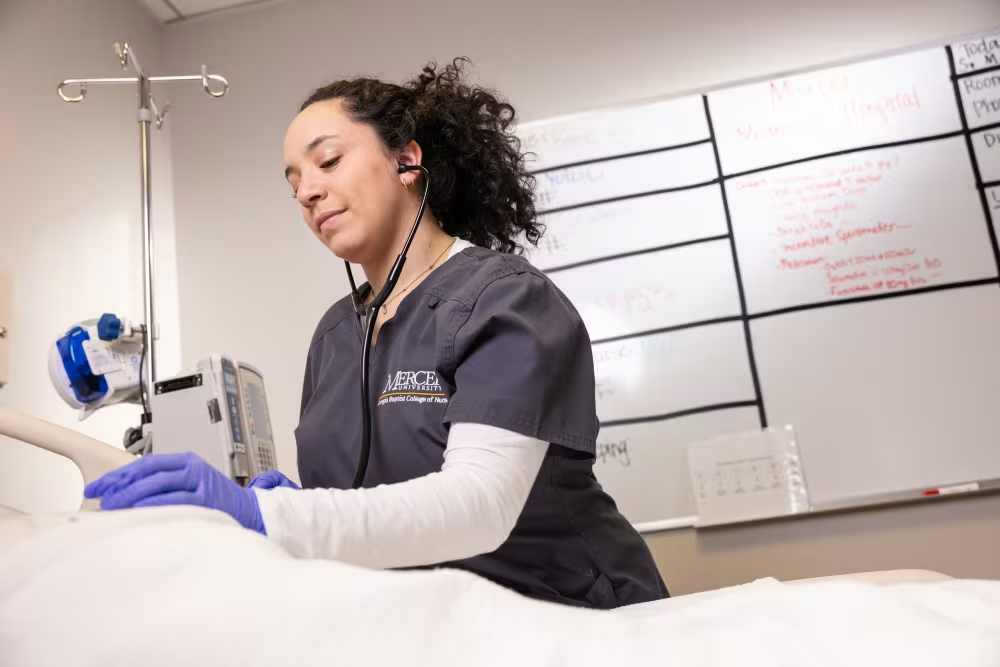
For students working toward a Bachelor of Science in Nursing (BSN) degree, online coursework can make a nursing education more accessible. Online classes provide an excellent foundation in nursing theory, and clinical and decision-making skills are also essential. Online coursework is paired with in-person, hands-on learning experiences, which include clinical rotations. Clinical rotations are also known as nursing clinicals, clinical placements, or clinicals.
At Mercer University, our Second Degree Accelerated Bachelor of Science in Nursing (ABSN) track curriculum combines online-based coursework with in-person experiential learning through labs and clinicals. Mercer partners with some of the top healthcare facilities in the Metro Atlanta area for clinical placements. These immersive learning experiences enable you to learn from experienced nurses and practice delivering patient-centered care so that you can become a practice-ready nurse.
What are clinicals in nursing school? Before starting as an ABSN track student at Mercer University, take a closer look at what clinicals are, why they are important, and what you can expect from the experience.
What Are Clinicals in Nursing School?
Alongside coursework and nursing labs, clinical rotations are one of the three main components of the accelerated nursing curriculum. All future nurses, regardless of the degree type or track they are enrolled in, must complete direct patient care clinical hours. To complete this aspect of the curriculum, you will be placed in a healthcare facility to work alongside experienced nurses under the supervision of a clinical faculty member. You will interact with patients, provide care, and refine your clinical skills.
Clinicals are opportunities to put what you learn in your coursework and in the skills lab into practice. You can observe nurses at work across multiple specialties and settings, which can help you choose the nursing specialty that might be the right fit for you.
Clinicals are essential for skill development. Not only will you hone skills through practice and observation such as starting an IV or checking a patient’s vitals, but you will also have the opportunity to practice the crucial interpersonal skills of nursing practice. For example, clinical rotations allow you to interact with patients and practice therapeutic communication techniques that you learn throughout the curriculum. Similarly, you will learn how to administer care in clinical settings and how to communicate and work with other providers.
As a Mercer University ABSN student, you will rotate across some of the top healthcare facilities in the Atlanta, Georgia metro area. You will gain experience practicing across a variety of specialties. These specialties may include:
- Acute care
- Adult health
- Long-term care
- Maternity care
- Mental health
- Pediatrics

Discover some of the top benefits of earning a BSN to become a nurse.
What to Expect During Nursing School Clinical Rotations
As you progress in nursing school, coursework will become increasingly advanced. Similarly, your responsibilities during clinicals will develop over time, starting with basic tasks and progressing to more advanced clinical skills. You will have opportunities to practice the nursing process and develop nursing judgment and decision-making skills.
Discover what to expect before, during, and after each shift:
Before Your Shift
It is common for nursing students to review key nursing concepts prior to each clinical shift. This can help you feel more prepared to begin your shift.
Before each clinical shift, you may have a meeting with your clinical instructor and classmates to go over the plan for the day. This is a great opportunity for you to ask any questions you may have and gain clarity on any relevant expectations or concepts for the day.
During a Clinical Shift
On your first clinical shift, you may receive a tour of the facility and your floor. Expect introductions to staff members, as well as orientation to the emergency exits, patient and procedure rooms, and locations of equipment and supplies. You may also listen to a discussion of hospital policies.
Each day will be different during clinicals. In general, however, you might expect to be assigned to one or a few patients throughout the day, and you may follow a practicing nurse. As you progress in the ABSN track, your responsibilities may also progress.
Tasks that you will practice include:
- Performing patient assessments
- Assisting with medication calculations and administration
- Providing wound care
- Taking vitals
- Assisting patients with the activities of daily living (ADLs)
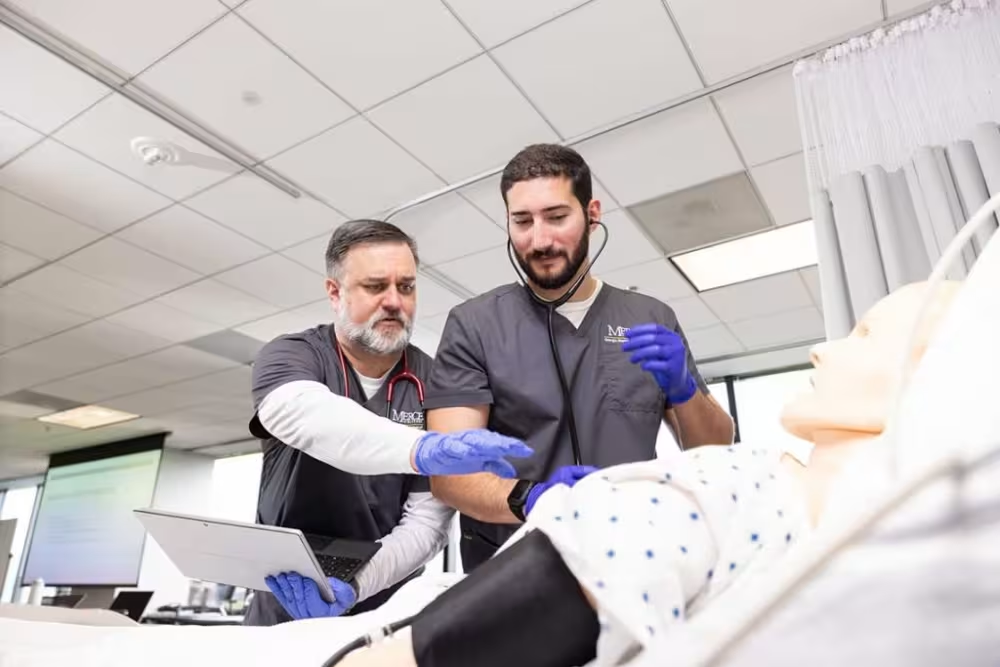
Many of the tasks that you will complete in clinicals, you will have already practiced during our skills and simulations labs on manikins and simulators that replicate a range of patient scenarios. It is vital that you actively participate in your labs to ensure that you are prepared for your clinical rotations and can safely take care of your patients.
After Your Shift
Once your clinical shift is over, you may reconvene with your classmates and clinical instructor for a final meeting, at which point you will likely have the chance to ask any questions or share your experiences and learning opportunities from the day. This meeting is often referred to as a post-conference and is another valuable part of the clinical day.
Tips for Success in Nursing Clinicals
Clinicals are a unique opportunity to refine your skills, learn by practice, and build connections for your future career. It is important to make the most of the experience.
1. Be Prepared
Preparation is essential for success during nursing clinicals. This involves staying on top of your coursework and labs and getting extra help from your nursing instructors and Academic Success Coach when needed.
Prepare a list of questions for your pre-shift meeting and review relevant nursing concepts.
Discover some of the top reasons why nursing is a great career choice.
2. Be Receptive to Feedback
Make the most of your clinicals by keeping an open mind and being receptive to feedback. Take advantage of opportunities to further your nursing skills with the help of your instructor and the nurses on staff. Ask your instructor about opportunities for improvement and take notes as needed. When time allows, ask the nursing staff for feedback on your performance as well.
3. Refine Your Future Career Plans
While many students go into nursing school with an idea of which specialty they would like to pursue, others use nursing school to discover which specialty is right for them. Regardless of where you fall on this spectrum, keep an open mind about your options. You may find yourself falling in love with acute care even if you had plans to go into pediatrics, for example.
4. Act Professionally
You will start establishing a professional reputation for yourself during clinical rotations, and the way you conduct yourself can help connect you with future opportunities. Professionalism during clinicals involves following a floor-ready dress code by:
- Keeping your ID badges displayed appropriately
- Pulling back long hair neatly
- Wearing clean scrubs and closed-toe shoes
The following action items can also help you leave a polished impression on those you work with:
- Arrive at each shift well-rested.
- Be at least 15 to 20 minutes early for each shift.
- Be receptive to feedback.
- Volunteer for tasks.
- Be accessible and communicative with patients.
- Strictly adhere to HIPAA requirements.
- Maintain professional boundaries with patients and nurses.
Take the Next Step With Mercer University
Mercer University’s ABSN track is designed for individuals who hold a previous bachelor’s degree and who are interested in becoming a nurse in as few as 12 months. At our ABSN Learning Site, you will benefit from a close-knit cohort, small class sizes, and Academic Success Coaches, along with our state-of-the-art facilities and resources.
Request information to get started and target one of our three annual start dates.